Product Description
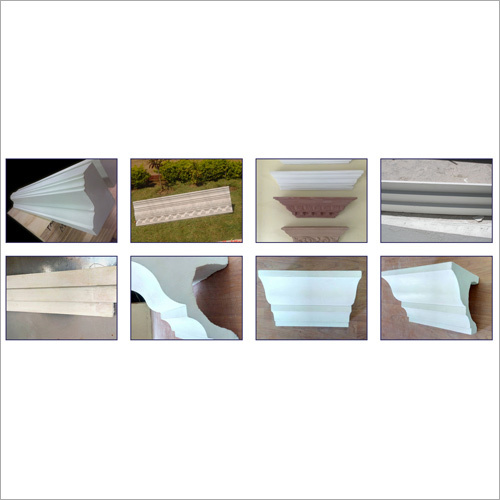
Notable for its stylish appearance, this Glass Reinforced Concrete Moulding is widely used for interior decoration of architectures. Basically used as frame line material, this molding item is fire retardant and is painstakingly carved. Accessible in different styles, finishes and size .options, this molding is made of standard grade glass fiber, additives, fine particles of sand and cement. Protected against alkaline environment, water, damp, mildew and frost, this GRC product can withstand damaging effects of high temperature. Free from maintenance charge, it is highly durable and has prolonged service life. We are an eminent supplier and manufacturer of excellent grade GRC Molding.
Glass Reinforced Concrete Moulding Features:
- Known for its high tensile strength, this molding has long working life.
- Frost proof surface
- High durability
- Flawless surface quality
GRC mouldings are engineered for high strength and exceptional durability. With compressive strength up to 70 MPa and flexural strength up to 20 MPa, these mouldings withstand demanding architectural and structural needs. Enhanced with excellent fire resistance and weatherproof properties, they maintain integrity even in harsh environments, making them ideal for long-term external or internal usage.
Innovative Design & CustomizationWith GRC moulding, customization possibilities are extensive, allowing for bespoke shapes, textures, and colors to suit any architectural vision. Whether you need rectangular, curved, or unique forms, each piece can be tailored to meet the specific requirements of your project. Surface finishes range from smooth to polished, ensuring a perfect aesthetic fit.
Eco-friendly and Sustainable ChoiceConstructed from high purity, eco-friendly materials, GRC mouldings offer an environmentally responsible alternative for modern construction. The low water absorption and high thermal and acoustic insulation further contribute to energy efficiency and comfort, while the products lifecycle exceeds 50 years with minimal maintenance.
FAQs of Glass Reinforced Concrete Moulding:
Q: How is Glass Reinforced Concrete (GRC) moulding manufactured?
A: GRC moulding is produced using either the spray-up or cast-in mould technique. Alkali-resistant glass fibers are blended with a cementitious composite, then formed directly into custom shapes using CNC, manual, or cast moulding processes. Finishes can be smooth or polished, depending on design and specification.
Q: What are the key benefits of using GRC mouldings in construction projects?
A: GRC mouldings provide excellent durability, lightweight structure, superior fire resistance, low water absorption, and weather resistance. They also offer acoustic and thermal insulation, customizable appearances, and are made from environmentally friendly materials, making them suitable for a wide range of architectural and landscaping applications.
Q: When should GRC mouldings be considered over traditional materials?
A: GRC mouldings are ideal when projects demand lightweight yet strong architectural elements, enhanced fire and weather resistance, or unique design flexibility. They are especially beneficial for projects seeking a sustainable, low-maintenance solution with customizable finishes and shapes.
Q: Where can GRC mouldings be installed?
A: GRC mouldings are suitable for both interior and exterior locations, including facades, columns, panels, cornices, and decorative pieces. Their resilience and aesthetic versatility make them a preferred choice for modern construction, architecture, landscaping, and restoration projects.
Q: What is the typical installation process for GRC products?
A: GRC products can be installed either as pre-fitted or post-fitted units, often using mechanical fixings designed to suit each project. Installation methods vary by application but generally prioritize stability, structural integration, and ease of maintenance.
Q: How does GRC enhance acoustic and thermal insulation in buildings?
A: The composition of GRC, combined with its design adaptability, gives it low thermal conductivity for better insulation and superior noise reduction capabilities. This makes interiors more comfortable and energy efficient, particularly in high-traffic or temperature-sensitive environments.

 08045800186



 Send Inquiry



